Advantages of mobile application for business
The advantages of mobile applications for businesses cannot be overestimated, and today, in this article, we will tell you all about it.

Your customer is scrolling through their phone, bored on their way to work. Suddenly, they remember needing that specific thing you sell. But instead of searching the web and hoping your website pops up, they whip out their phone and tap your app icon. It’s fast, convenient, and easy.
The advantages of mobile applications cannot be overestimated, and today, in this article, we will tell you all about it. So, cozy up with a warm cup as we’ll explore how this pocket-sized digital tool can transform customer interactions and propel your business forward.
Reasons for a company to develop its own mobile app
Nowadays, every person uses a smartphone. We wake up in the morning and pick up our phones, while during breakfast, we scroll through some social media or look at funny videos. Moreover, it’s easier to communicate, pay bills, shop or book, and do many other things through apps on our phones.
According to Statista, the performance of mobile devices is growing rapidly, with the number of users worldwide standing at 7.33 billion in 2023. What’s more, this metric is expected to reach 7.49 billion in 2025. The numbers are crazy, and as we can see, they will not go down.
For businesses, this is a great thing to invest in. Yes, a website is a must-have for any industry because it is the way for users to find something on the web. At the same time, mobile apps are a great solution for improving awareness, increasing conversions, and attracting a wide audience of users. But let’s not reveal all the benefits at once, as in the next chapter, we will lay down more insights.
Top 10 advantages of mobile app development
If you’re still on the fence about developing mobile apps for your business, we’re here to clear your doubts. There are a lot of advantages of mobile apps, and today, we highlighted 10 of the best ones to tell you about.
1. Mobile apps are faster
Apps are placed directly on your users’ mobile phones and perform their actions much faster. Thus, the data is stored locally on the device and can be accessed instantly. Mobile websites, in turn, have to download information from web servers, which can take several seconds to a minute.
In addition, users can unlock their phone by clicking on your app icon, and that’s it! There is no need to wait for online pages to load or open a large number of tabs in the browser (which is very annoying). With mobile apps, clients can browse products, place orders, and use services all in one place. This ensures that they are satisfied every time and will come back to you again and again.
2. Personalized content
We all love when something, including content, is customized for us. With mobile apps, you can tailor information according to your user’s preferences. You can track their activity, offer individualized recommendations, and filter updates. Based on this data, the application will automatically select relevant recommendations, targeted offers, and content tailored specifically for a particular user.
Your business, meanwhile, will definitely gain favor among the audience. Personalized content is that magic tool that helps impress your users and make each one feel valued. As a result, they will spend more time in your apps, discover new products, and ultimately become loyal customers. And you’ll get conversions and profits, wouldn’t that be great?
3. Instant online and offline access
With mobile apps, users can access content instantly with a single tap. Then, with a few scrolls, they can get the necessary information and place an order, make an appointment, or do anything else needed in a couple of clicks. This instant access allows users to access and consume content wherever they are.
But offline experience also comes into play here. Let’s face it: you don’t always have access to the Internet, and neither do your customers, of course. Whether you’re on an airplane, train somewhere, or at a conference where there’s no Wi-Fi, offline mode is another advantage of mobile apps. Yes, tasks such as payments or notifications require internet access, but the ability to consume pre-loaded content and functionality offline can make the difference between gaining a loyal customer or losing them.
4. Using device features
Smartphones have more tricks than you might think. So, by developing mobile apps, you can provide users with additional sweet features they won’t be able to use on the web version. For example, after installing your app, users can take advantage of a camera to scan QR and barcodes, NFC to make payments, and GPS to find nearby locations.
In addition, you can add other special functions, such as an accelerometer, gyroscope, and compass, for various purposes. One interesting solution is to implement fingerprint scanning on devices, which can be useful in different cases. Ultimately, with extra features, customers reduce the time required to perform additional actions and have a pleasant experience while interacting with your app.
5. Push notifications
Perhaps everyone has been in a situation where they missed an important event or dropped a cool discount because they simply didn’t check their inbox. Of course, it’s not a pleasant case, but you can fix it with push notifications (not to be confused with in-app notifications that come directly to the app!).
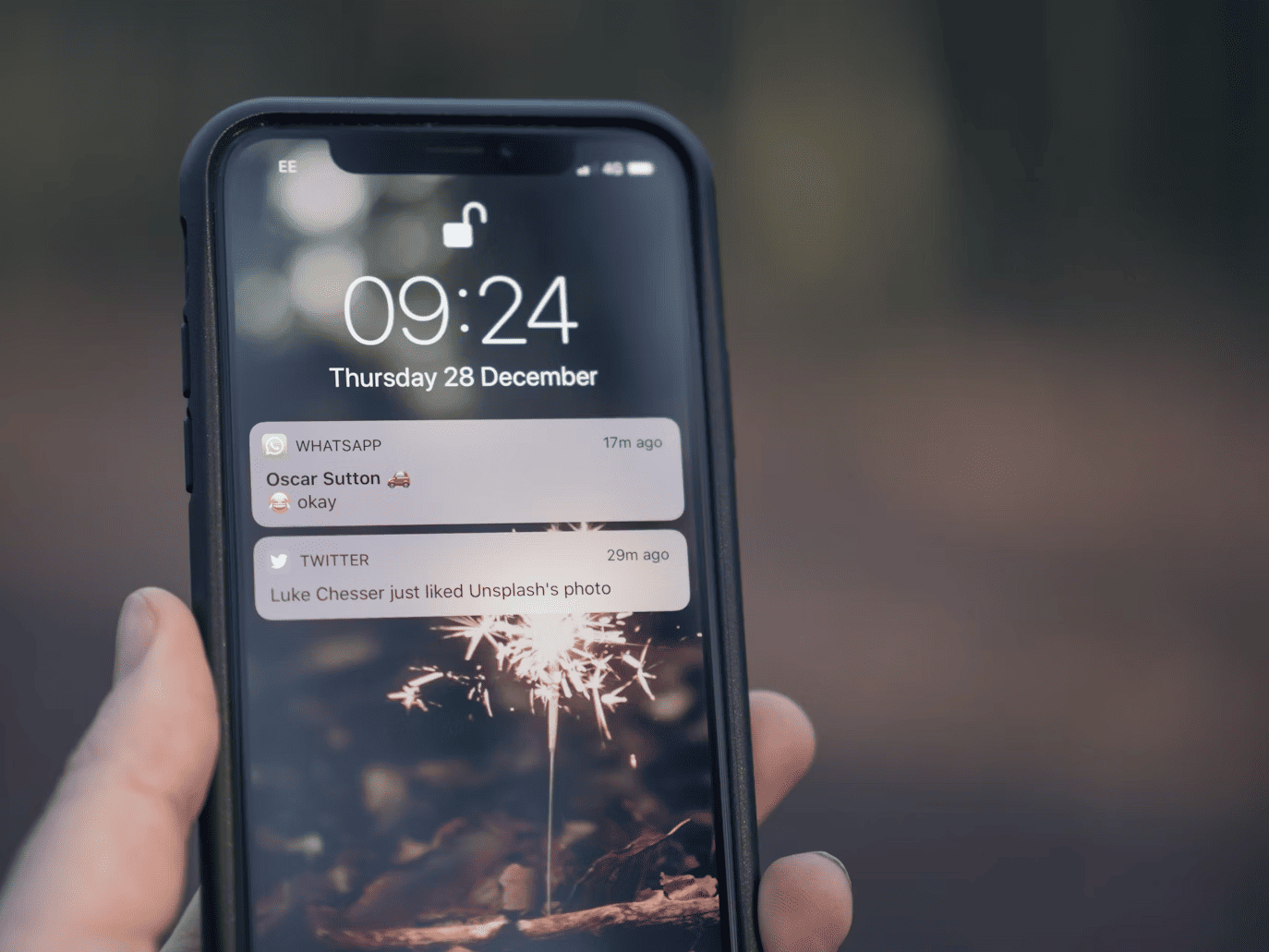
You can send users regular updates, promotions, or even order confirmations to keep them in the loop. Customers will hear the sound of the notification (which you can also make unique to your app) and read what you have in store for them with a smile on their face. This is a great opportunity for you to tell more about products or novelties and get customers to interact.
6. Branding and design
First impressions matter, and the look of a mobile app is no exception. When you design a simple and attractive interface, users are more likely to explore it. However, remember, your mobile application shouldn’t be the exact opposite of your website. On the contrary, it must complement your online presence and make you, as a business, more recognizable in the industry.
If you decide to change your branding, take care of your mobile app as well. Update the version, adjust the color palette to your style, and make the navigation easy and the look stunning. A beautiful visual immediately catches the eye and builds trust in your brand image, which sticks in the minds of users.
7. Productivity improvement
No one likes to fill out boring spreadsheets, look at an endless to-do list, or scroll through a long feed looking for the “right” information. Well, mobile apps can simplify any of these processes and significantly improve productivity.
We’re not just talking about a better experience for your customers but also about optimizing internal processes between teammates. Mobile apps with unique features can save time on various tasks, reduce errors, and empower employees. And all of this can be done with a few clicks in one platform, which can’t help but be beneficial!
8. Cost reduction
Many people think that mobile apps are another huge expense. In fact, it is. But over time, it is an investment that helps you save money in the long run. First of all, you don’t have to spend cash on printed materials such as brochures or loyalty cards (this is a thing of the past). Right in the app, you can promote certain offers or top products that can bring you the most revenue.
When it comes to optimizing internal team processes, mobile apps are also a great solution. You can share information and communicate with colleagues through specially integrated social channels right on the platform. This is especially beneficial nowadays, given that Facebook and Twitter have started charging for premium space and conversations.
9. Interactive engagement
Intricate scrolls, eye-catching animations, and attractive graphics allow users to fully immerse themselves in your app. Combined with vibrant colors and bright elements, you are sure to keep customers engaged for a long time and benefit from increased revenue.
But let’s not forget about the gamified experience that is gaining popularity among mobile apps. You can take advantage of this and offer loyalty programs where users can earn points, receive rewards, and even compete with friends. This will improve the customer experience with your app. After all, who doesn’t like to have a bit of fun?
10. Better customer support
Customers don’t like to wait, and that’s a fact. Mobile apps, then, can help your users get rid of long waits or phone holds. To do this, you can add an FAQ block so that visitors no longer search for answers on the Internet, or integrate an online chat button with a real person (a manager).
Many industries are increasingly using AI bots that instantly respond to customer challenges. You can program a chatbot according to your specifics, thus providing users with instant access to information. In any case, be sure to use multiple customer support options so that everyone can choose what suits them best and remain satisfied with the result.
Costs of building a mobile app
Costs of building a mobile app The question of the cost of mobile application development is of interest to all, but unfortunately, there is no correct answer.
Whether you own a startup, have a small business, or run a huge enterprise, the cost of developing a mobile app will depend on a number of factors. First of all, it is the required functionality. Everything is simple here: the more complicated the application is to develop, the more you will have to pay for it. Plus, to these costs, you will need to add the creation of a design, if necessary.
Anyway, in order not to guess what the price for development might be, get in touch with us to discuss the specific details of your project and get an accurate price.
In which industries mobile apps use to be popular
Mobile apps are everywhere now, and it would be hard to name a specific industry that doesn’t take advantage of them.
Shopping is probably the most popular sector among all others because who doesn’t like to shop online? People download apps with various products to make it easier for them to browse products and take advantage of promotions and bonuses. Another niche is food and drink, with a huge pile of apps with various functions. Just in a few clicks, users can order takeout, find trendy new restaurants, or even get a coffee fix delivered.
Health apps are also picking up steam. In addition to the fact that many people use them to simplify the process of making an appointment or delivering medications, even hospitals and healthcare providers are actively using them for their own needs.
But hold on, these are just a few examples, and there are really cool apps popping up in all sorts of industries. Basically, if there’s something people do in their daily lives, there’s probably an app to make it easier or more fun!
FAQs
How do I choose the best app developer?
When it comes to choosing the best app developer, you will see a lot of offers on the market. Be sure to pay attention to the portfolio, as this is an indicator of the company’s experience in a particular activity. Also, read the reviews left by clients and make a conclusion for yourself.
What features should an app have?
Here, focus on the features you need. You can make a list of “must-have” functionality, which you can supplement with “nice-to-have” things. However, don’t forget that the app should be compact and simple.
Should you develop a mobile app or website for your business?
At IvorySoft, we believe that a website is a good starting point. However, a mobile app is a great solution to expand the functionality and the audience. In any case, having both platforms that bring conversions and profits is always a pleasant feeling!
