Navigating FinTech app development: A complete guide for 2024
FinTech app development explained: app types, must-have features, security and compliance requirements, costs, and the key steps to build a financial app.

FinTech app development is the process of building web and mobile applications that deliver financial services — payments, banking, lending, investing, insurance — on top of secure, regulation-compliant infrastructure. A successful FinTech app needs three things: a clearly scoped use case, bank-grade security and compliance from day one, and a team that has shipped financial software before.
FinTech app development has become a cornerstone for businesses seeking to revolutionize the way users interact with financial services. With a 25% success rate among FinTech startups and $23 billion invested in the first half of 2023 alone, the industry is worth the venture despite its competitiveness.
Discover the strategies, tools, and best practices that define successful FinTech application development, and learn how to create a digital financial experience that resonates with users in an ever-evolving technological landscape.
This comprehensive guide delves into the intricacies of finance app development, exploring features, types, and key considerations. In particular, we’ll cover the following topics:
- What Is a Fintech Application?
- What Customer Needs Do the Fintech Apps Address?
- Fundamental Features of Fintech Apps
What Is a Fintech Application?
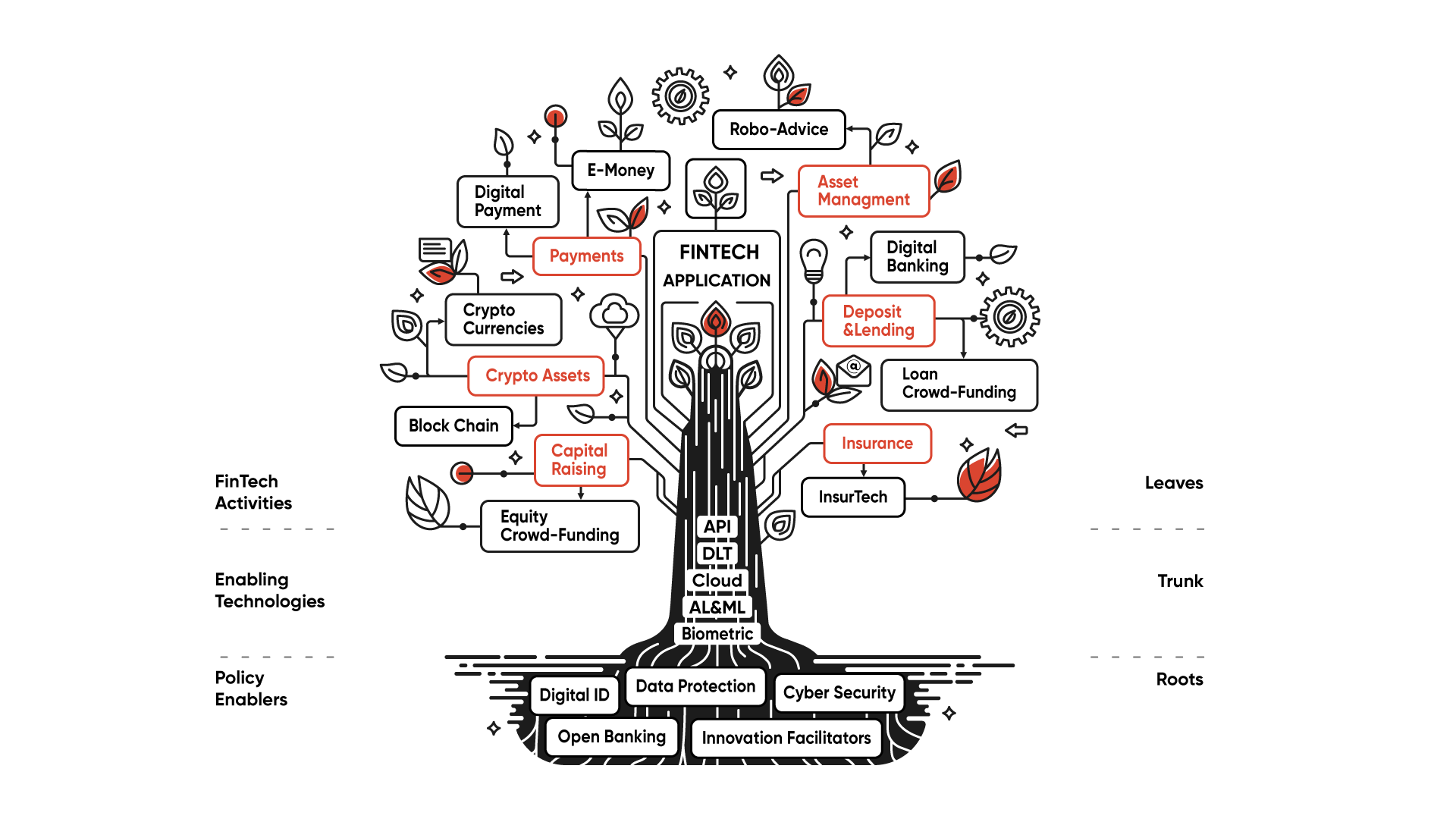
FinTech software is a web or mobile application that leverages technology to provide financial services and solutions.
It’s designed to perform financial transactions, manage accounts, purchase digital insurance, trade cryptocurrency, and more. They often use advanced technologies like artificial intelligence, blockchain, and data analytics to personalize, automate, and elevate traditional financial solutions.
What Customer Needs Do the Fintech Apps Address?
FinTech products leverage technology and innovation to provide more efficient, accessible, convenient, and customer-centric solutions that aim solve various challenges and problems, such as:
Inefficiencies in payment services and cross-boarder transactions: facilitate smoother and more cost-effective cross-border transactions, addressing challenges associated with international payments and currency exchanges.
Lack of financial Inclusion: with 1.4 billion adults remaining unbanked as of 2021, online banking helps reach individuals who may be excluded from traditional banking systems, loans, and investment opportunities.
Slow and inefficient processes: automating and digitizing helps streamline and accelerate financial processes, consolidate financial information, as well as manage assets, investments, and expenses from a centralized platform.
Limited access to investment options: democratize access to investment opportunities and provide transparent and real-time information about investment performance.
Addressing these challenges contributes to the transformation of the financial landscape, making financial services more inclusive, efficient, and user-friendly.
Fundamental Fintech App Features
There are several fundamental features commonly found in many fintech apps to provide users with a comprehensive and secure financial experience.
Registration
According to a LoginRadius Report from 2020, 70.79% of younger consumers prefer a simple social login to long registration forms. But financial apps may also need the user’s SSN, for example, to check their financial status. This may be crucial for apps that provide insurance or lending services.
Dashboard
A dashboard should provide quick access to features and services, such as user account balance, payments, history of transactions, and even a support chat button. It can also be a customizable part of your app, allowing users to decide what they want to view on the dashboard.
Payment Gateway
A payment gateway is a financial service in itself, which enables secure transactions. It acts as an intermediary between a customer’s payment method (such as a credit card or digital wallet) and the merchant’s website or point-of-sale (POS) system. There are many ready solutions, and you can implement the feature via an API.
Push Notifications
App notifications can help provide users with valuable information, such as real-time transaction updates, payment reminders, security alerts, personal insights, promotions, and other alerts. You can make the feature customizable, but it has to be by choice. Some surveys suggest that only 18% of users find the feature beneficial, and 50% don’t mind receiving notifications if they’re optional.
QR Code Scanner/Generator
A QR scanner can make it easier to interact with the app. For example, adding this feature to a banking app will simplify payment transfers with a QR code containing a payment gateway link. Another example is when an app allows users to generate codes, so other app users can scan them and transfer money within seconds. QR payments work well for P2P and C2B transactions alike. Personalization In terms of design, achieving true personalization is challenging. But you can offer:
Customizable dashboards where users can pin or hide sections like account balances or investment portfolios for a tailored experience.
Personalized insights and recommendations, like budget suggestions, investment opportunities, and savings tips.
Tips and Explanations
Integrating functionality that provides users with tips and explanations is essential for onboarding. Especially if the app audience isn’t great with smartphones, offering step-by-step guidance or demonstrating how services work can add to the appeal and improve the user experience.
Major Requirements for FinTech App Development
Developing a fintech app is a complex and highly regulated process. Creating a successful fintech app involves several major requirements and considerations, such as:
Security measures
Back in 2021, there were 5,379 data breach incidents in the EMEA region, with 89% of them having financial motives. The same year, in the US alone, the Identity Theft Resource Center recorded 1862 data breaches.
Cybercriminals phish for credentials and attack companies that have access to payment card details. At the very least, you can implement biometric authentication options, such as fingerprint or facial recognition, to counteract these attempts. Your solution will also benefit from the secure handling of sensitive financial and personal data, robust encryption, strict user authentication mechanisms, and other data protection measures.
You can always consult your tech vendor on what measures you can implement to secure your application. For example, in Truevo we created quick access with a passcode and Face ID, as well as access to the web app using a code in the mobile version.
Legal compliance
FinTech apps development often involves collaboration with legal and compliance experts to navigate the complex regulatory landscape, that involves:
- Know Your Customer (KYC), Anti-Money Laundering (AML), and other data protection laws and regulations.
- Rules and guidelines from app stores like Apple App Store and Google Play Store.
- Terms of service and privacy policies that users must agree to.
- Data backup and recovery processes to safeguard user data in case of unexpected events.
API and other integrations
APIs help enhance functionality and provide access to external services. Depending on the app’s focus and features, you can integrate the following APIs:
- Identity: Auth0, Okta, Twilio Verify, Jumio, Trulioo, and Onfido help verify user identities, comply with KYC regulations, and enhance the security of user accounts.
- Financial data aggregation: Plaid, Yodlee, and Salt Edge help aggregate financial data from bank accounts, investments, loans, credit cards, and other sources.
- Credit scoring and reporting: Experian, Equifax, TransUnion, or Credit Karma provide users with access to their credit scores and credit reports, aiding in financial planning.
- Market data and analytics: Alpha Vantage, IEX Cloud, and Yahoo Finance API provide real-time market data, stock prices, and financial analytics for investment and trading purposes.
- Communication and notifications: Twilio, SendGrid, or Firebase Cloud Messaging enable efficient communication with users through SMS, email, or push notifications.
- Geolocation and address verification: Google Maps API and SmartyStreets API assist in geolocation services and address verification, ensuring accuracy in financial transactions and user location-based services.
- Document verification: Adobe PDF Services API and DocuSign API enable document verification, electronic signatures, and secure document handling for various financial processes.
Before integrating any API, it’s crucial to review its documentation, understand the terms of use, and ensure that it complies with regulatory requirements.
Usability
Usability involves ensuring that users can easily navigate the app, access information, and perform transactions securely and efficiently. Here are a couple of examples of how you can improve it:
Menu structure. Simplify navigation by organizing the menu into clear categories like Accounts, Transactions, Payments, and Support using recognizable icons or labels.
Enhanced transaction details. Ensure transaction details include clear descriptions, merchant names, locations, timestamps, amounts, and categories for easy tracking.
Confirmation and feedback. After every transaction, provide clear confirmation messages or receipts. Use subtle animations or distinct colors to signal success and provide immediate feedback.
Enhancements should simplify complex financial processes while maintaining security and providing user support.
Customer support
You can integrate a support section into the app to provide in-app support. This support section may include FAQs, chat support, or the option to contact customer service directly from the interface. Furthermore, contextual help or tooltips can be implemented to assist users while they navigate through the app.
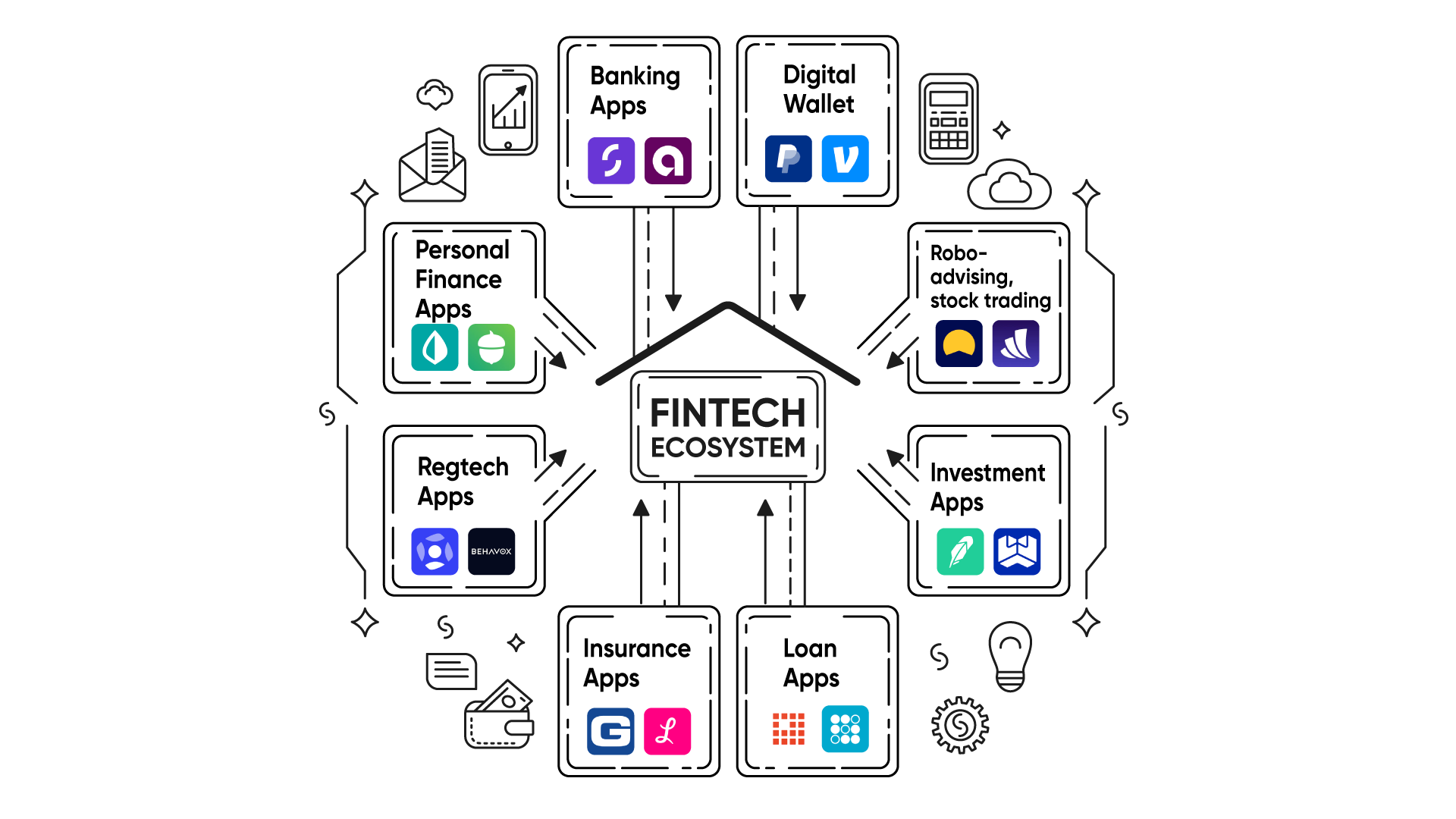
9 Common Types of FinTech Applications
Financial apps cater to different needs, offering solutions for banking, investing, budgeting, and various other aspects of personal and business finance. Let’s dive deeper into each type and look at some examples.
Insurance apps
Insurance apps serve as a tool for providing immediate assistance and help in selecting the most appropriate and cost-effective plans. They also ensure a direct channel to their user base for insurance companies and play a critical role in expediting the claims process, managing policies, and minimizing the risk of insurance fraud.
Geico Mobile: an auto insurance app that offers digital ID cards, a responsive virtual assistant handling policy inquiries, and a parking locator for advanced reservations.
Lemonade: tailored for homeowners and renters, it operates on a unique principle, charging a fixed fee for services.Surplus premiums are channeled to various charities throughout the year – the app’s distinguishing feature.
Investment apps
Investment apps offer an easier way for users to enter the stock market with a wider range of features beyond stocks, including for beginners with limited funds. They ensure expert guidance or even allow users to participate in simulated stock games to grasp market mechanisms.
Robinhood: a gateway to the trading world, where users can get quick stock information and stay up-to-date with news and investment trends.
Wealthbase: a stock market game app that blends stock selection with social media, allowing users to see what stocks their friends are interested in and giving a glimpse into their investment world.
Banking apps
A banking app usually supports a physical bank as a way to provide instant access to various services, including account and transaction management. For a traditional bank, this is a way to stay competitive and retain digitalized clients, on the one hand, and automate some tasks for employees – on the other.
- Starling: a digital bank that doesn’t require any documents to open an account. It allows users to manage their budgets, transfer funds to other bank accounts, and manage savings.
- Ally: a banking app with advanced security and a simple user interface. It allows users to transfer funds, invest, and manage debit or credit accounts.
Regtech apps
Regtech apps help manage regulatory processes and address related challenges, such as AML, KYC, data privacy, reporting, and risk management. They provide effective, precise, and automated solutions to follow legal requirements, minimizing the possibility of fines and legal entanglements.
Onfido: an AI-based app that specializes in verifying user identities for businesses using document checks and facial recognition technology. You can integrate it with other fintech software.
Behavox: targets compliance and risk management in finance and uses AI to oversee employee conduct, guaranteeing internal rule and regulation observance.
Loan apps
Loans FinTech solutions provide a digital platform for personal, business, student, and other types of credit services to individuals and businesses. These apps use data-driven methods and technology to make the lending process more accessible and convenient. Loan apps provide transparency in terms of interest rates, repayment schedules, and eligibility criteria.
LendingClub: a platform for lending between peers, where those who need a loan can apply online, while those who want to invest can spread their risk by contributing to multiple loans.
SoFi: provides personal loans, refinancing options for student loans, and mortgage loans. It promotes low-interest rates and benefits for members.
Personal finance apps
Personal finance apps aim to help people manage their money better by giving them control over their finances, a clearer understanding of their spending habits, and the ability to work towards their financial goals through effective money management.
Mint: Offers everything you require for budgeting, expense tracking, bill management, and monitoring your credit score all in one place.
Acorns: Acorns is unique in its approach of investing spare change from rounded-up purchases, making investing more accessible to users.
Robo-advising and stock trading
Robo-advisors are automated investment platforms that use algorithms and computerized models to provide investment advice and manage portfolios. They aim to democratize investing, making it more accessible to the average person, whether they seek automated management with minimal involvement.
- Betterment: a robo-advisor app with diversified options for investment management that uses automated algorithms to create personalized portfolios based
- Wealthfront: an automated investment management service that offers features, such as tax-loss harvesting and a high-interest cash account.
Digital Wallet
A mobile or e-wallet is a virtual platform that allows users to store payment card information, manage funds, and perform transactions through a mobile device or computer. Wallets like Apple and Google Pay that support NFC technology, enabling contactless payments in physical stores by simply tapping or waving the mobile device near a compatible terminal.
PayPal: A versatile digital wallet allowing users to store card information, transfer money to friends, make online purchases, and manage subscriptions.
Venmo: Primarily focused on peer-to-peer payments, Venmo allows users to split bills, pay friends, and share payment information in a social feed.
How to Create a FinTech App — Essential Steps
Developing a fintech app involves several critical steps to ensure a successful and secure platform. Throughout the development process, it's also crucial to prioritize security, regulatory compliance, and user experience to ensure the app's success and maintain user trust in the FinTech space.
Here are the key stages in the development process.
1. Conduct market analysis and choose the application type
You can define the app's purpose and unique value proposition by researching market trends, user needs, and potential competition. For example, if you want to build a digital wallet, you might have to compete with Google Pay, Apple Pay, and other popular apps. In this case, an in-depth analysis of the target audience will help determine the pain points and challenges your target users face and how you can overcome them with your app.
With careful analysis of your research results, you can make informed decisions about the type of fintech app that aligns with your project goals and user expectations, whether it's a payment app, investment platform, budgeting tool, or another fintech solution.
2. Find the right development team
Finding the right team out of dozens of app development companies is crucial for its success. Here are steps to help you identify and assemble the right team:
Define your project requirements. Outline your project goals, app features, functionalities, and specific technologies needed. This will help you identify the skills and expertise required from team members.
Identify core team members. A core team typically includes a project manager, developers, designers, and QA specialists. The size of your team will depend on the complexity and scale of your fintech project.
Evaluate experience and expertise. Look for teams with experience in FinTech or related industries. Review portfolios to assess their previous work and familiarity with financial regulations, security standards, and industry best practices.
Compliance and security expertise. Verify that the team understands and can implement security measures and compliance requirements relevant to the financial industry.
Check references and reviews. Reach out to previous clients or employers of team members to gather insights into their work ethics, communication skills, and the quality of their deliverables. Additionally, check online reviews and testimonials.
Discuss the budget and timeline. Discuss your budget constraints and project timeline with the potential team, and ask for a FinTech development app estimate.
3. UI/UX design development
When creating a user-friendly interface and intuitive design for the app, focus on simplicity, ease of navigation, and a visually appealing layout that enhances user experience. For this you will need to:
- Understand the user persona, their preferences, and typical behavior.
- Map out the user journey from onboarding to completing key tasks.
- Ensure the design is responsive and optimized for various devices and screen sizes.
- Optimize performance to ensure quick loading times and smooth interactions.
- Provide immediate feedback for user actions, like a successful transaction message.
- Design seamless transaction flows with a focus on simplicity and security.
- Create a user-friendly onboarding process into the key features and functionality.
- Make room for A/B testing to gather insights on user preferences.
By incorporating these considerations into your UX/UI development process, you can create a fintech app that meets user expectations and provides a delightful and trustworthy experience for users interacting with financial services.
4. Ensure compliance
Legal compliance is a critical aspect of developing and operating financial apps, given the sensitive nature of financial transactions and the regulatory landscape in the financial industry. The following are some key legal compliance considerations.
- General Data Protection Regulation (GDPR)
- California Consumer Privacy Act (CCPA)
- Bank Secrecy Act (BSA)
- Consumer Financial Protection Bureau (CFPB
- Payment Card Industry Data Security Standard (PCI DSS)
- U.S. Securities and Exchange Commission (SEC)
- Web Content Accessibility Guidelines (WCAG)
You should also consider cross-border compliance, electronic signatures, insurance and liability coverage, and your incident response plan. This helps navigate regulatory challenges, build trust with users, and operate within the bounds of the law.
5. Choose your monetization model
Monetization models can vary based on the services offered, the target audience, and the overall business strategy. Here are common monetization models for fintech apps:
Subscription-based. Users pay a recurring subscription fee to access premium features or services within the app. This model is often used for apps that offer advanced financial planning tools, investment advice, or premium account features.
Freemium. The app is free with basic features, and users can choose to pay for additional premium features or an enhanced version of the app. This model is common for budgeting apps or investment platforms.
Transaction fees. Charge users a fee for each transaction conducted through the app. This model is prevalent in payment apps, money transfer services, and investment platforms.
Licensing or white-labeling. License the fintech app to other businesses or financial institutions, allowing them to use the technology under their brand. This model is common for apps with specialized financial tools or services.
In-app advertising. Display advertisements within the app and earn revenue through ad impressions or clicks. This model is suitable for apps with a large user base, such as budgeting or personal finance apps.
Interest income. If the app is involved in lending or offers savings accounts, it can generate revenue through interest income. The app earns interest on loans or investments.
Some solutions use a combination of these monetization models to diversify revenue streams.
6. Develop an MVP
When developing a Minimum Viable Product (MVP), it's crucial to focus on delivering essential features that demonstrate the core value proposition of the product, showcase the uniqueness and value of your app, and directly contribute to solving the targeted problem.
Design the MVP with scalability in mind. While the initial version may have limited features, ensure that the architecture can accommodate future expansions and updates.
Set realistic timelines and budgets for the development of the MVP. Keep in mind that the goal is to launch quickly with the minimum set of features required to validate the concept.
7. Testing and quality assurance
Conduct thorough testing for functionality, usability, security, and compatibility across different devices and operating systems. Testing and quality assurance are critical aspects of fintech app development to ensure a secure, reliable, and user-friendly product.
Application testing includes functional, security, usability, performance, and other types that help ensure a robust, secure, and reliable application that meets regulatory standards and provides a positive user experience.
8. Release your app to the intended platforms
Release the app to the intended platforms, such as the iOS and Android app stores, after thorough testing and ensuring it complies with app store guidelines. These platforms offer significant visibility and access to a large user base.
As for web apps, they are accessible through browsers, making them available on a wide range of devices, including desktops, laptops, tablets, and smartphones. Once you ensure that your web app is fully developed, and all necessary features have been implemented and tested, select a web hosting provider that suits your needs.
9. Gather feedback and improve your app
Post-launch monitoring and updates are crucial for understanding user experiences, identifying areas for improvement, and making informed updates. Effective strategies to collect valuable feedback include in-app feedback forms, surveys and questionnaires, app store reviews, beta testing programs, and many others.
Final Thoughts
The fintech industry continues to evolve, introducing new apps and innovations that aim to simplify processes and provide greater access and control over banking, investment, insurance, and payment services. Applications encompass a wide range of technologies that ensure convenience, security, and compliance.
FinTech app development hinges on a strategic approach, continuous feedback collection, and the incorporation of user insights for continuous improvement. Along with this, finding the right team is a critical step in your project’s success. If you’re ready to discuss your ideas, consult Ivorysoft and get an estimate.
FAQ
How much does it cost to develop a FinTech app? FinTech app development cost typically ranges from $60K to $350K, driven by the app’s complexity, technology stack, team rates, and geographic location. The financial-specific overhead matters as much as features: KYC/AML flows, security audits, and regulatory compliance add real engineering time. A payment or budgeting MVP sits at the lower end; a licensed banking, lending, or trading product with heavy integrations sits at the top.
How long does it take to develop a FinTech app? A FinTech MVP usually takes four to six months, and a full product with integrations and compliance reviews six to twelve. FinTech timelines run longer than typical apps because security measures, KYC/AML flows, and legal review are part of the critical path, not add-ons. The scope defined in discovery — features, integrations, and target regulations — is what makes the schedule predictable.
How do FinTech apps make money? FinTech apps monetize through recurring subscriptions, freemium tiers that unlock premium features, per-transaction fees, licensing or white-labeling the technology to other businesses, in-app advertising, and interest income on lending or deposits. Most successful products combine several models — for example, a free personal-finance tier plus paid analytics and interchange revenue on a linked card.
How do you find the best FinTech software development services? Look for a development company with shipped FinTech work: review portfolios and case studies for projects like yours, confirm the team understands security standards and regulations (PCI DSS, KYC/AML, GDPR), and talk to previous clients or check independent reviews. Then validate the working process — discovery, estimates, and communication — before committing to a long build.
What is FinTech architecture? FinTech architecture is the structural design of the technology components inside a financial application — the user interface, application logic, databases, external integrations, and security layers — organized to meet the industry’s specific demands. It differs from generic app architecture in its emphasis on security, auditability, scalability, and regulatory compliance, so decisions like data encryption, transaction logging, and API isolation are made upfront rather than retrofitted.
